


Review : Tears from Iron: Cultural Responses to Famine in Nineteenth-Century China
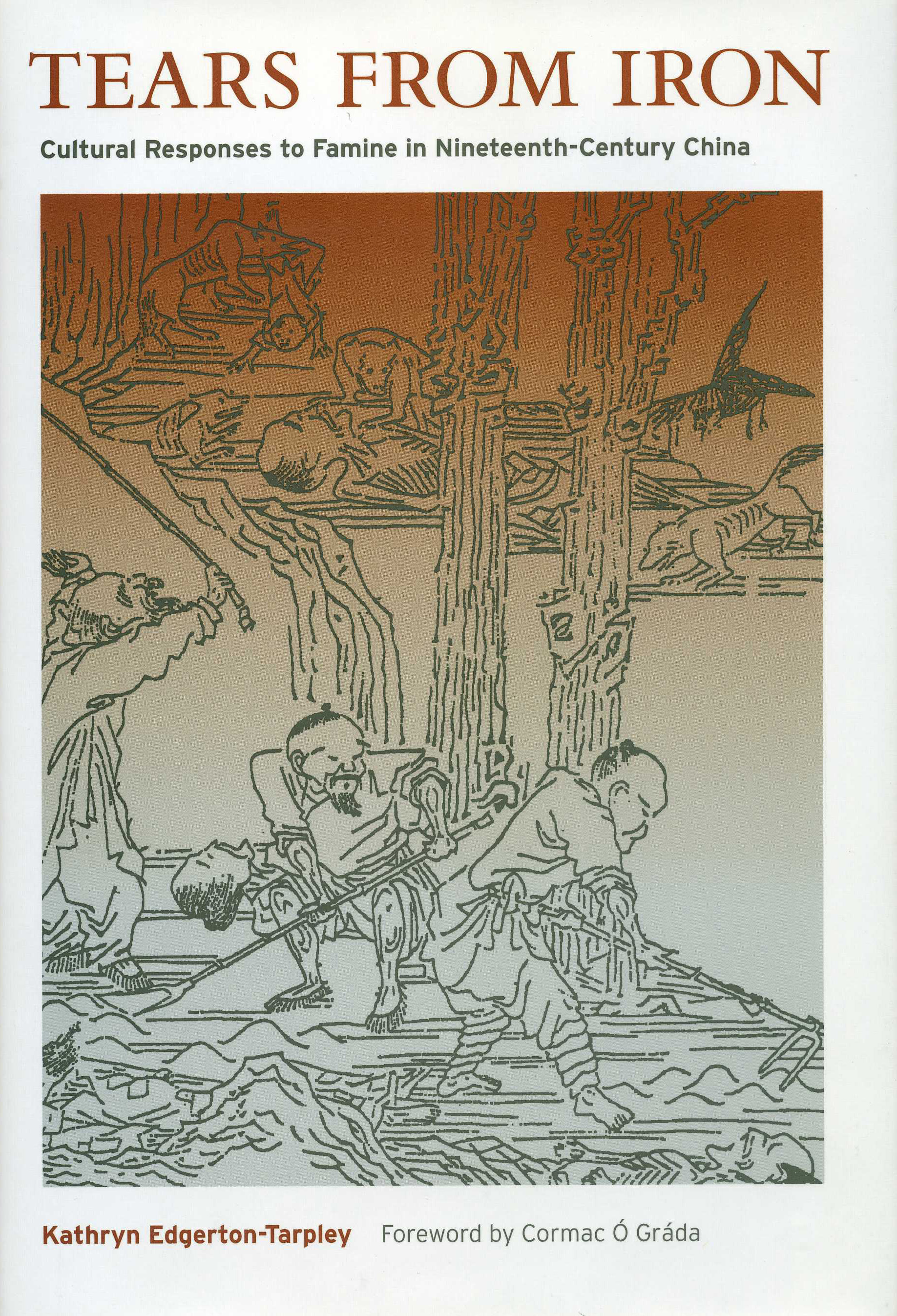
Kathryn Edgerton-Tarpley, Tears from Iron: Cultural Responses to Famine in Nineteenth-Century China, Berkeley, University of California Press, 2008, xxiii + 332 pp., illustrations.
Compte-rendu de Pierre-Étienne Will paru dans le dernier numéro de China Perspectives, 2010, 4.
The “Incredible Famine of 1878-1879” (dingwu qihuang 丁戊奇荒),1 which devastated the northern provinces early in Emperor Guangxu’s reign, may be said to have been China’s first internationalised famine: it took place under other countries’ gaze, it was much reported in Europe, and within China itself it came to be deemed a national shame because of the sorry spectacle it offered foreigners. The multiplicity of views and interpretations that famine sparked within and outside China is at the centre of this solid, undeniably original, and quite successful book – my only (slight) reservations being a certain penchant for sentimentality and an occasional overly didactical style, probably out of a desire to cater to the undergraduate market. Apart from a detailed account of the famine and its horrendous consequences in Shanxi Province, the book attempts a “cultural” history of the event by reviewing the extremely divergent and even contradictory perspectives of the victims of the catastrophe, of local officials, of the “modernisers” and traditionalists among the upper strata of the state, of the North China Herald and its self-important foreign readership in the Shanghai concessions, of missionaries on the ground, of leaders of new Buddhist philanthropy also centred in Shanghai, and of the Shenbao, which they used as their organ.

OpenEdition vous propose de citer ce billet de la manière suivante :
Jacqueline Nivard (18 mars 2011). Review : Tears from Iron: Cultural Responses to Famine in Nineteenth-Century China. . Consulté le 8 novembre 2026 à l’adresse https://doi.org/10.58079/me36